


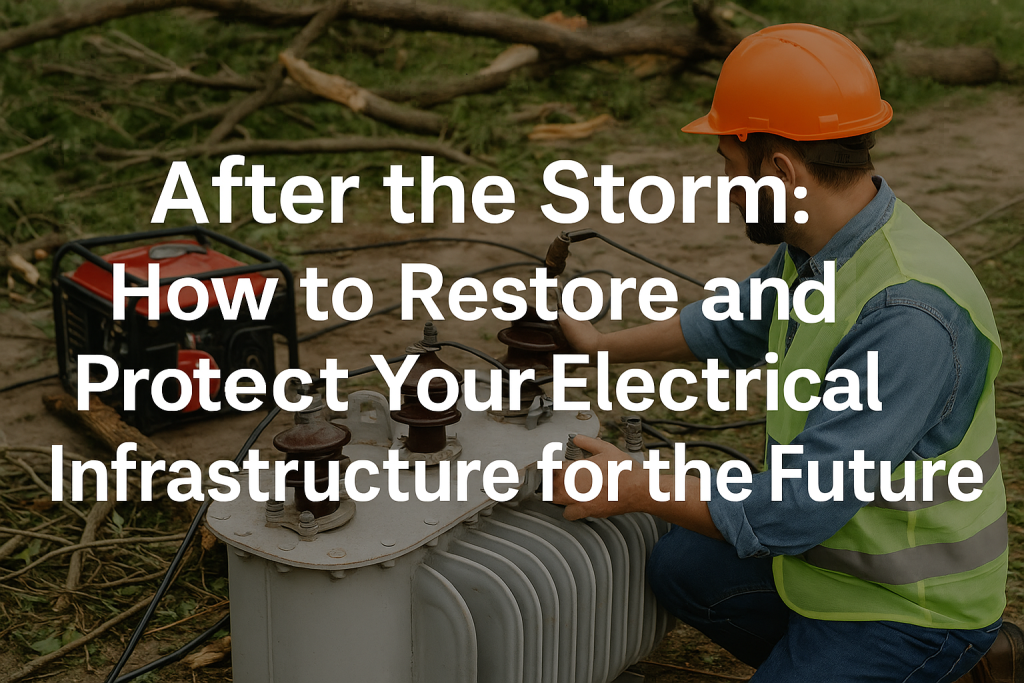
When a hurricane strikes, it tests more than our resilience—it challenges every component of the electrical systems that power our homes, businesses, and critical operations. And while the calm after the storm brings relief, it also brings responsibility: assessing the damage, securing essential equipment, and preparing for the next event.
In the recovery phase, having the right equipment—such as generators, substation components, and electrical parts—can make all the difference. Below, we outline practical steps and expert recommendations to help you restore your infrastructure safely and strategically.
1. Start with a Full Assessment: Safety First
Even if everything “looks fine,” hidden damage is common after strong winds and flooding.
Key Areas to Inspect
- Generators: fuel contamination, filter saturation, alternator moisture, lubrication levels
- Automatic Transfer Switches (ATS): corrosion, misalignment, damaged contacts
- Substations: transformer oil contamination, cracked insulators, stressed arresters
- Cabling & Terminations: water intrusion, insulation breakdown, loose or overheated connections
Real-world scenario:
A generator may still start after a storm, but if water reached the alternator or filters, it could fail under load—exactly when you need it most.
Request a quote for replacement parts: Click Here
2. Generators: The Backbone of Post-Hurricane Continuity
Generators often become the primary power source during recovery. However, most failures after a storm come from lack of maintenance—not from the storm itself.
Maintenance Best Practices
- Drain water or sediment from fuel tanks
- Replace air and oil filters exposed to humidity
- Run the generator under load to detect hidden issues
- Inspect coolant hoses and belts for cracks or swelling
Example:
A facility believed their generator was “storm-ready,” but a simple load test revealed a cracked coolant hose that would have caused a shutdown during critical operations.
Explore energy and backup solutions: Click here
3. Substations: Strengthening the Heart of Your Electrical System
Substations take a heavy hit during hurricanes—wind, debris, and flooding create conditions that accelerate component failure.
Post-Storm Action Checklist
- Evaluate all insulators for hairline cracks
- Check transformer oil levels and contamination indicators
- Inspect and replace lightning arresters that show signs of stress
- Test grounding systems for continuity and safe resistance levels
Example:
A substation showed no exterior damage, yet a lightning arrester had internally degraded due to storm surges—replacing it prevented a major outage later.
Request a quote for replacement equipment: Click here
4. Don’t Overlook the Small Components—They Prevent Big Failures
Often, what stops an entire system after a hurricane isn’t a transformer—it’s a small but essential consumable.
Critical Spares to Keep on Hand
- Fuses
- Switches and breakers
- Terminals, lugs, and connectors
- Lubricants and dielectric cleaners
- Cables and replacement terminations
- Lightning arresters
- Insulators and bushings
Having these items ready accelerates recovery and increases system reliability.
To see our complete energy and electrical solutions: Click here
5. Prepare Now, Protect Tomorrow
The best time to strengthen your electrical infrastructure is during the calm—not in the middle of an emergency. Each inspected generator, replaced arrester, and updated component brings security and continuity to your operations.
At Eneka Global, we support your recovery with high-quality equipment, technical guidance, and reliable access to the parts you need. We are here to help!
Get a personalized quote: Click here
To explore our energy and alternatives portfolio: Click here